
Your Cart is Empty
Free Shipping Over £40 | Standard Shipping £3.95
Free Shipping Over £40 | Standard Shipping £3.95

micro:bit for beginners: what it is, what you need and where to start
October 18, 2026 2 min read
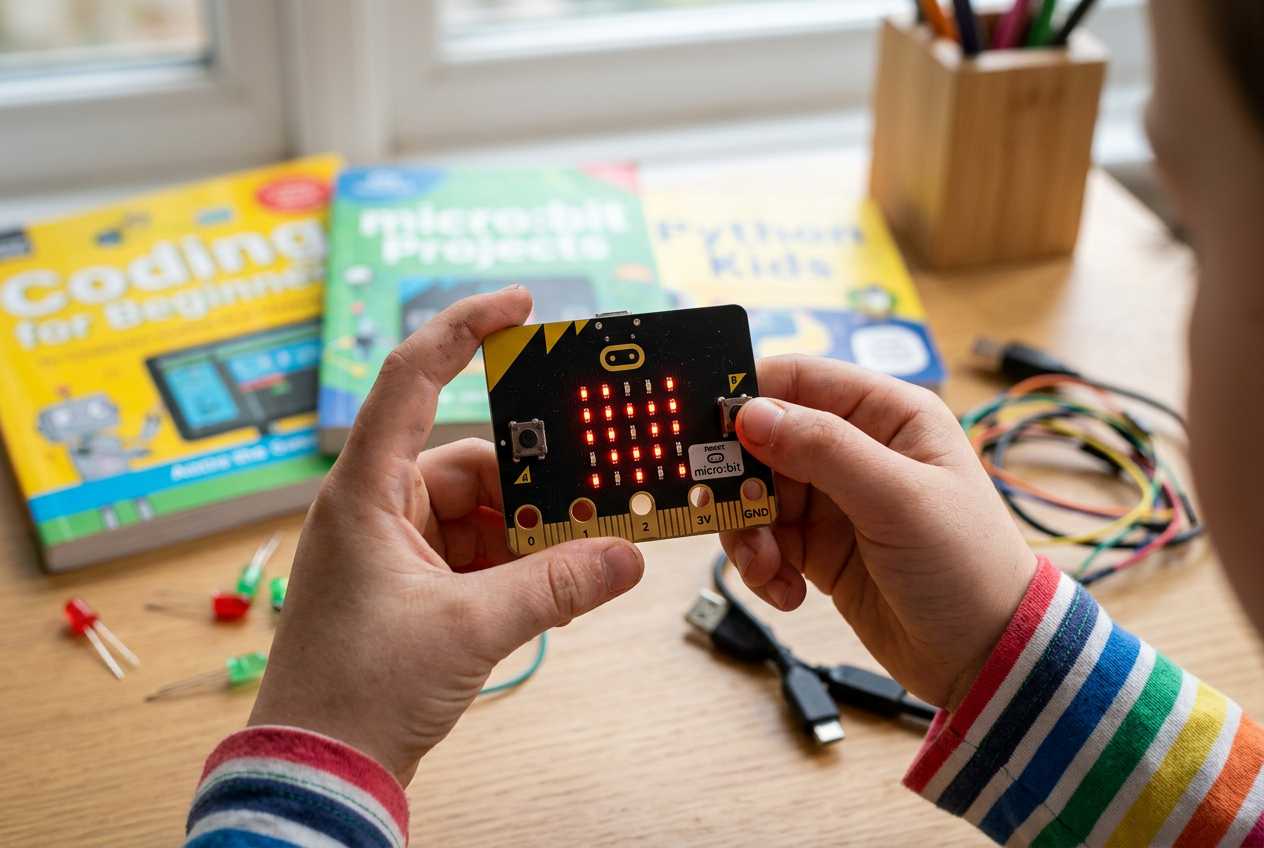
The BBC micro:bit is a small programmable computer that children can code to light up, sense movement, play sounds and control robots. It is one of the most popular ways to learn coding at home because it is hands-on and the results are immediate. Here is what you need to know before buying.
What is a micro:bit?
It is a pocket-sized board with an LED display, buttons and sensors built in. Children write programs on a computer or tablet (using block-based coding at first, then text if they like) and send them to the board. You can see the BBC micro:bit V2.2 board in our shop.
What age is the micro:bit for?
It is widely used in schools from upper primary onwards, and many younger children enjoy it with an adult beside them. Check the age on each kit page.
What do I need to get started?
- A micro:bit board. Some kits include one and some do not, so read the page carefully. Kits "with micro:bit" include the board.
- A computer, laptop or tablet to write the code on.
- Power: most kits use batteries or USB.
- Optionally, a kit with parts to build with.
Which kit should I start with?
- Simple experiments: the Basic Kit and Starter Kit with micro:bit.
- Learning electronics: the Experiment Board.
- Robots: the Cutebot smart car.
- Games: the Retro Programming Arcade.
- Build and code: the Thames & Kosmos Robotics Workshop.
Do you need to know how to code?
No. Block-based coding is drag-and-drop, and many kits come with lesson ideas. Adults can learn alongside children.
FAQ
Is a micro:bit better than a Raspberry Pi?
They do different jobs. The micro:bit is simpler and a gentler first step.
Is it screen-free?
You code on a screen, but the results happen in the real world, which is the point.