
Your Cart is Empty
Free Shipping Over £40 | Standard Shipping £3.95
Free Shipping Over £40 | Standard Shipping £3.95
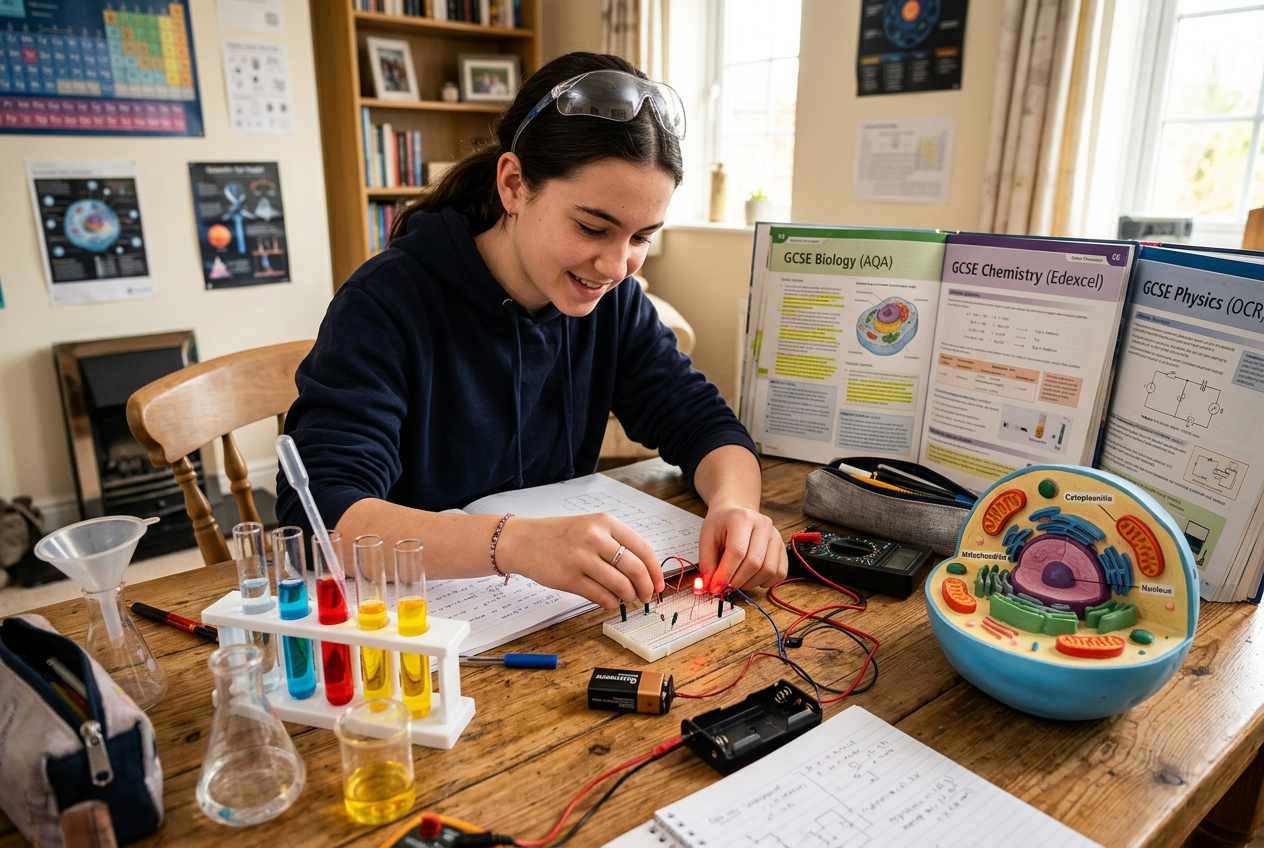

Science kits and games that help with GCSE science
October 15, 2026 1 min read
Hands-on science kits help with GCSE science by making ideas physical: children see a reaction, feel a force or build a circuit. That makes the textbook version easier to picture later. They do not replace the curriculum, but they build curiosity and practical thinking.
How can science kits help with GCSE science?
GCSE science (biology, chemistry and physics) includes practical work and asks pupils to plan investigations, handle data and explain results. Kits give early practice at asking a question, testing it and noticing what happens.
Which kits suit chemistry?
The Chemistry Set C1000 has 128 experiments; the C500 Starter Set is a gentler start (ages 9+). Always follow the instructions and supervise.
Which kits suit physics and engineering?
- Gyroscope for rotation and balance
- Simple Machines for levers, pulleys and forces
- Roller Coaster Engineering for energy and motion
- Hydraulic Cyborg Hand for pressure and fluids
Which products suit biology?
GeoSafari stereo microscope encourages close observation. DNA, Animal Cell and Brain Cell Giant Microbes make biology words familiar and friendly.
How do we get the most from a kit?
- Ask "what do you think will happen?" before each experiment.
- Change one thing at a time and see what changes.
- Write or draw results in a notebook.
- Ask "why do you think that happened?"
FAQ
Will a kit help my child's grades?
It can build interest and understanding, but it is not a substitute for school science or revision.
What age are kits for?
Check the age on each product page.
See STEM kits by age and skills for GCSE.