
Your Cart is Empty
Free Shipping Over £40 | Standard Shipping £3.95
Free Shipping Over £40 | Standard Shipping £3.95

From KS2 games to GCSE computer science: a path for young coders
October 14, 2026 1 min read
The best preparation for GCSE computer science is computational thinking: breaking problems down, spotting patterns, writing step-by-step instructions and debugging. All of these can be practised years earlier with games, then with a micro:bit.
What is computational thinking?
It means working out how to solve a problem so that a computer, or a person following instructions, could do it. Children can learn it without a computer.
What should we start with in KS2?
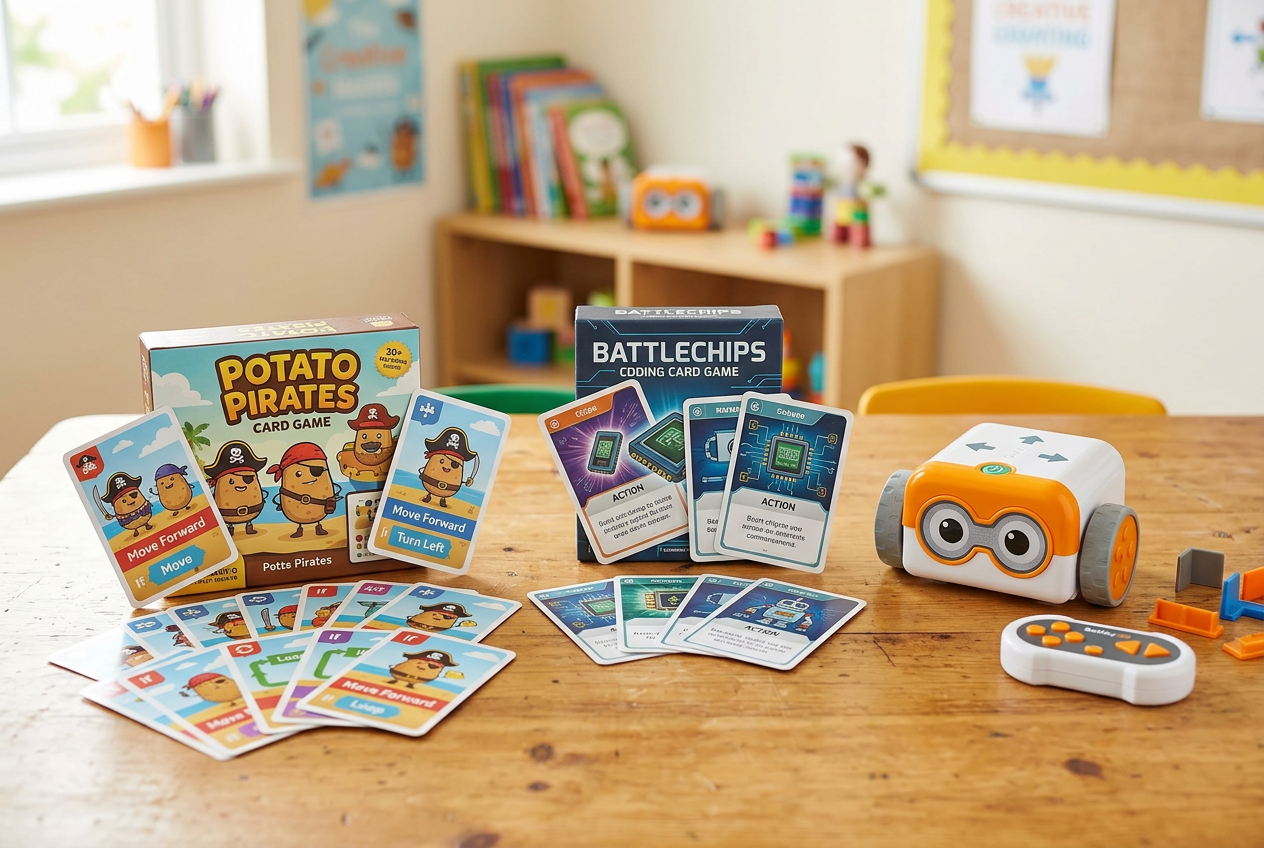
- Potato Pirates teaches sequencing and planning with cards.
- Battlechips is another coding card game.
- Botley 2.0 is a programmable robot for younger children.
What next in upper KS2 and KS3?
A micro:bit lets pupils code real hardware. See micro:bit for beginners and kits and accessories. The Cutebot Pro adds robotics.
What about cybersecurity?
Enter the Spudnet is a cybersecurity board game from the Potato Pirates makers. Check the age on the page.
What about logic and codes?
See codes and ciphers and logic puzzle games.
Do they need to learn to type code?
Many beginners start with blocks, then move to text. GCSE computer science involves programming, so the earlier they get comfortable the better. Your child's school will guide the language used.
FAQ
Is GCSE computer science only coding?
No. It also covers how computers work, data and networks. Check your child's exam board.
Do games guarantee a good grade?
No. They build interest and habits.
See also how to teach kids to code at home.