
Your Cart is Empty
Free Shipping Over £40 | Standard Shipping £3.95
Free Shipping Over £40 | Standard Shipping £3.95

Games and puzzles for KS3 (ages 11 to 14): thinking skills for secondary school
November 13, 2026 6 min read
The best games and puzzles for KS3 are ones that feel grown-up enough for an 11 to 14-year-old while quietly exercising the thinking secondary school asks for: planning ahead, reasoning from evidence, explaining your ideas and keeping going when something is hard. Strategy games, deduction puzzles and team word games do this brilliantly, and they work just as well at the kitchen table as in a form room or lunchtime club. This guide explains what changes at secondary school, what to look for in a game for this age, how to tempt a reluctant teenager to the table and how teachers can use the same ideas.
Why do thinking games matter at KS3?
In England, Key Stage 3 covers Years 7, 8 and 9, roughly ages 11 to 14. It is a big jump: more teachers, more subjects, more independence and, for many children, a new group of friends. Lessons start asking pupils not just for the right answer but for their reasoning, and many schools ask pupils to choose their GCSE options during Year 9.
Good games practise exactly those habits without feeling like homework. A strategy game asks "what will happen if I do this?", a logic puzzle asks "what must be true?" and a team game asks "can you explain what you mean?". Just as importantly, games give tweens and teenagers a low-pressure reason to spend time with family, which can become rarer at this age.
Five things to look for in a game for 11 to 14 year olds
1. It respects their age
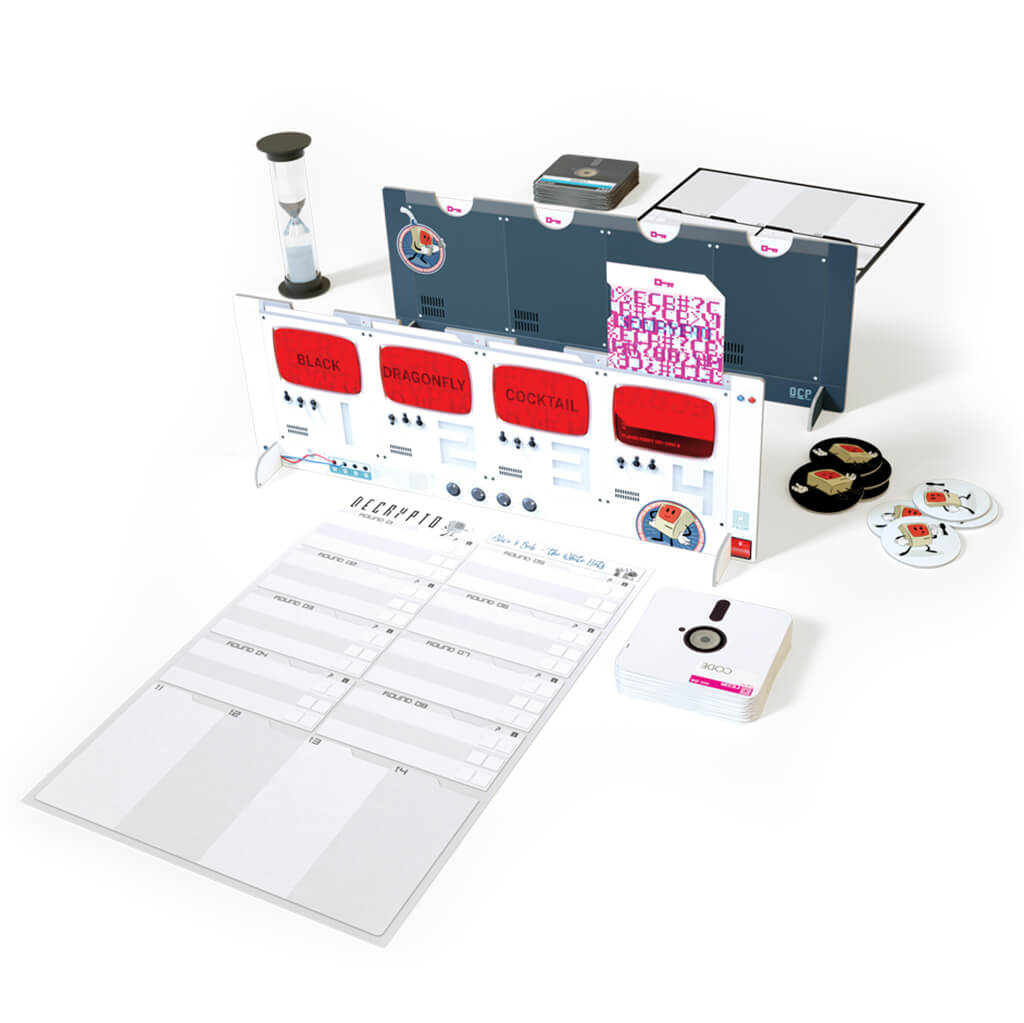
Nothing loses a Year 8 faster than a game that looks babyish. Choose clean design, real tension and rules that reward clever play. Decrypto (£14.99) is labelled 12+ and feels properly grown-up: two teams try to pass secret codes using word clues that are clear enough for teammates but vague enough that the other side cannot intercept them. It builds vocabulary, communication and logical thinking, and plays with three to eight people.
2. Simple rules, deep thinking
The best strategy games take minutes to learn and months to master. Shobu (£28.99) is a beautiful two-player game played on wooden boards with river stones. Each turn you make a gentle move on one board and copy it on another, trying to push your opponent's stones off the edge. The rules are simple, but the spatial thinking gets surprisingly deep, which makes it a lovely alternative to chess for a child who likes to out-think people.
3. Reasoning from evidence
Deduction is at the heart of maths proofs, science experiments and history sources alike. Einstein's House Riddle (£10.00) turns a famous logic puzzle into wooden pieces: use 15 clues to arrange the houses and work out who owns the fish. It is rated five out of five for difficulty, so it suits a patient puzzler who likes a real challenge. For a cheaper, pocket-sized option, Brain Train (£5.99) has 40 reusable logic puzzle cards with a dry wipe pen, labelled 12+.
4. Talking, listening and teamwork
Explaining your thinking out loud is a skill teachers value across every subject. In Investigation Express (£6.99), a co-operative deduction game for ages 10+, each player is forbidden from seeing some of the clues, so the only way to solve the case is to share and cross-check information. Nobody can take over, which is perfect for a mixed group. There are three investigations in one small box.
5. Something real to build or test
Not every thinker wants a board game. Some need to make something and see if it works. The Hydraulic Cyborg Hand (£24.99) is one of our most popular kits for this age. It is a construction kit for ages 10+ that builds a robotic hand powered by water alone, with no motor or batteries, and it is a great way to explore energy and engineering. For more hands-on ideas, see our science kits and games that help with GCSE science.
Matching the game to your child
- The strategist: Shobu for two players, or World's Smallest Catan (£9.99), a palm-sized version of the classic trading and building game that brings in probability, resource management and negotiation. It is labelled 6+ but is enjoyed by teenagers and adults, and this small edition is for three players.
- The wordsmith: Decrypto for clever clue-giving.
- The detective: Einstein's House Riddle or Investigation Express.
- The sociable one: The Chameleon Travel (£8.49) is a 12+ spot-the-imposter game: everyone gives one word about a secret topic, except the Chameleon, who does not know it and has to bluff. It rewards lateral thinking and reading people.
- The deep thinker: Philosophical Questions for Curious Minds (£10.00) is a pack of 52 big-question cards, such as "Is it ever right to lie?", that spark proper debate at dinner.
- The maker: the Hydraulic Cyborg Hand.
What to avoid
- Anything that looks like it belongs in a primary classroom. Bright cartoon boxes can put teenagers off before they have even tried.
- Games that only reward speed of recall. Quick quizzes are fun, but at this age the richer games ask "why?" and "what next?".
- Very long games on a school night. Twenty to thirty minutes is a sweet spot for most families.
- Pushing it. If a game becomes a chore, it stops doing its job. Leave it on the side and try again another day.
How do I get my teenager to play games with us?
It is a very common worry, and the answer is usually to change the game rather than give up. Let them choose, or even teach you, which hands them some status. Pick games with a bit of rivalry, bluffing or teamwork rather than anything that looks educational. Keep the first game short so it ends while they are still enjoying it. Inviting a friend round to play often works better than a family evening. And quick, high-energy games are a good way in: Ghost Blitz (£14.99), one of our best sellers, is a ten-minute game where players race to grab the right wooden object, and adults do not always win. For more on why playing together helps, see why multiplayer games build confidence in children.
Birthdays, Christmas and everything in between
- Birthdays: a two-player strategy game such as Shobu makes a gift that feels special and lasts for years.
- Christmas: a team game like Decrypto or The Chameleon Travel brings older cousins and grandparents together after dinner.
- Stocking fillers: Brain Train, Investigation Express and World's Smallest Catan are all small and inexpensive.
- Starting secondary school: a game they can take to a sleepover helps with making new friends.
- Holidays and journeys: small boxes travel well. See our guide to the best travel games for kids.
For secondary teachers, tutors and clubs
Thinking games are a natural fit for form time, lunchtime clubs, wet breaks, transition days and the last lesson before a holiday.
- Oracy and discussion: Philosophical Questions for Curious Minds works well as a form time starter, and Decrypto gets whole groups talking.
- Logic and reasoning: Einstein's House Riddle makes a satisfying challenge for a puzzle corner or a maths club.
- Teamwork in mixed groups: Investigation Express needs every voice, so quieter pupils have a real role.
- STEM and engineering clubs: the Hydraulic Cyborg Hand gives a tangible build to talk about forces and energy.
Buying for a class, a school or a PTA? Email us at info@steamrocket.co.uk and we will be happy to help you choose.
How to play so it does not feel like learning
- Ask "why did you do that?" out of genuine curiosity, never as a test.
- Lose honestly. Let them beat you fairly and enjoy it when they do.
- Talk tactics after the game. "What would you do differently?" is reflection without the worksheet.
- Keep a rivalry going. A running score on the fridge brings people back.
- Do not link it to school. The moment it becomes revision, the magic goes.
Frequently asked questions
What are good board games for 11 to 14 year olds?
Look for strategy games, deduction games and team word games with grown-up design. Decrypto, Shobu, World's Smallest Catan and The Chameleon Travel all suit this age well.
What age is KS3?
In England, Key Stage 3 covers Years 7, 8 and 9, usually ages 11 to 14, the first three years of secondary school.
Do logic puzzles help at secondary school?
They practise careful reasoning, patience and working from evidence, habits that are useful in many subjects. They are a fun extra rather than a replacement for lessons or homework.
What games can I play with a teenager who says games are boring?
Try short, social games with bluffing or rivalry, such as The Chameleon Travel or Ghost Blitz, and let them choose or teach the game.
Are these games good for classrooms and clubs?
Yes. Short co-operative and team games work well for form time and clubs, and puzzles like Einstein's House Riddle suit a puzzle corner or maths club.
Will playing games help with GCSEs?
Games will not replace good teaching or revision, but they can build confidence and thinking habits over time. Our guides to how games build skills for GCSE and games that help with GCSE maths explain more.
Ready to choose?
Browse our strategy games, our logic puzzles or everything in our age 12+ range. For more brain-stretching ideas, see our guide to the best logic puzzle games for kids. Every gift at Steam Rocket is chosen to make learning so much fun that children do not realise they are doing it.
Prices correct as of 13 November 2026. Where possible, prices on this page update automatically from our shop.