
Your Cart is Empty
Free Shipping Over £40 | Standard Shipping £3.95
Free Shipping Over £40 | Standard Shipping £3.95
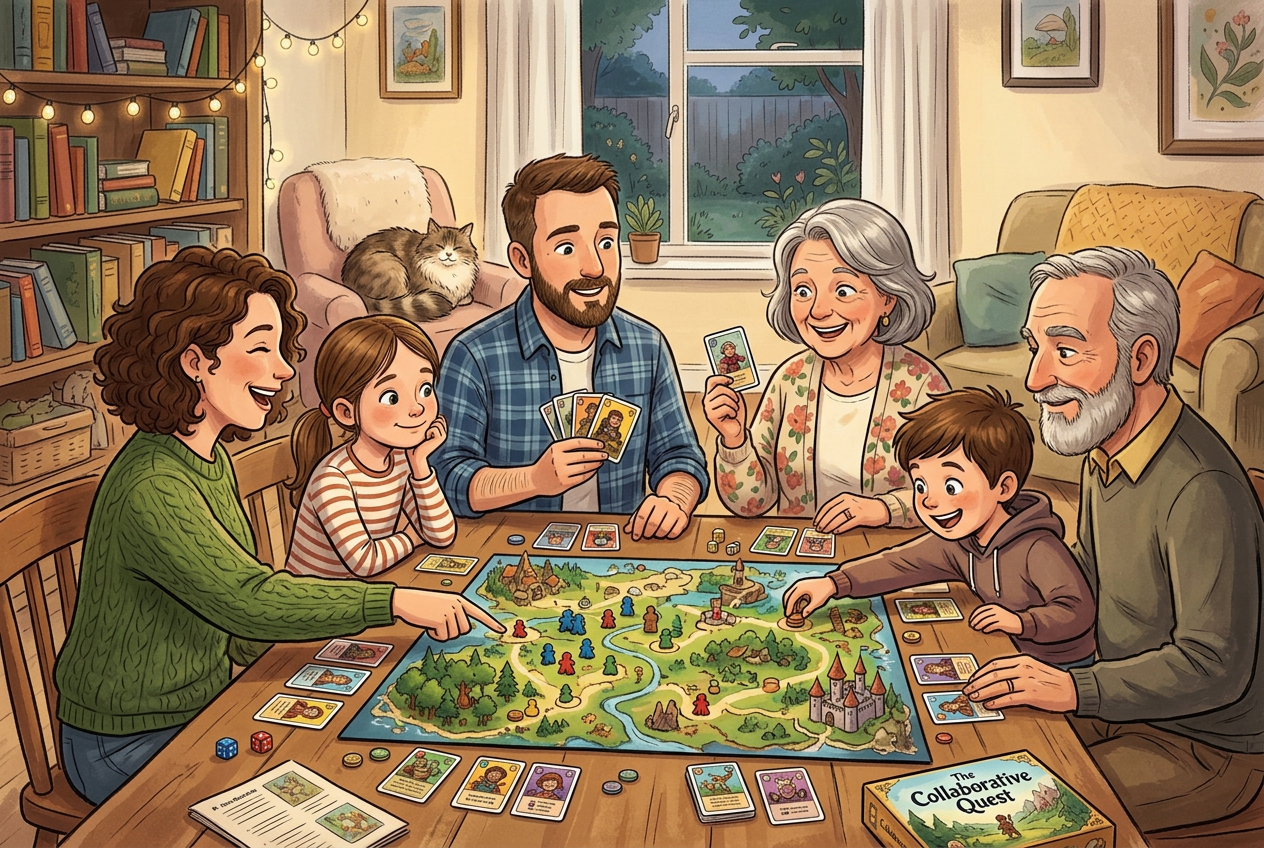

How to teach skills through playing games: a parent's guide
August 01, 2026 2 min read
You teach skills through games by choosing a game that practises the skill, playing it with your child, and talking about what happened afterwards. The game does the practising; you add the thinking. Here is how to do it without turning play into a lesson.
Why does learning through play work?
Children repeat things they enjoy, and repetition is how skills stick. A game gives a reason to count, remember, plan or take turns, again and again, with no worksheet in sight. Play is also where children are most willing to try, make mistakes and try again. For more on screen-free play, see why screen-free games are good for children.
Which games teach which skills?
How do you teach maths through games?
Pick games where numbers matter to winning. Tiny Polka Dot builds number sense for young children, Math Scramble practises addition and subtraction, Crew in a Stew practises times tables and Prime Climb explores multiplication and factors. See our guides for KS1 and KS2.
How do you teach memory and concentration?
Rocket Match suits ages 2 to 5, and Rat-a-Tat Cat asks children to remember their own cards.
How do you teach logic and problem-solving?
One-player puzzles such as IQ Fit and Camelot Jr teach children to test ideas. See logic puzzle games for kids.
How do you teach early coding skills?
Potato Pirates teaches sequencing with cards. More in how to teach kids to code at home.
How do you teach teamwork and communication?
Cooperative games like Outfoxed! and Bandido require talking and listening. See cooperative games.
How do you teach confidence and coping with losing?
Short games with plenty of replays. See why multiplayer games build confidence.
How do you teach estimating and thinking skills?
Roughly: A Guesstimation Game asks players to estimate, a skill used in everyday maths.
How do you make a game teach without ruining the fun?
- Play first, talk second. Let them enjoy it. Ask questions afterwards.
- Ask open questions. "How did you work that out?" or "What would you do differently?"
- Let them lead. Children learn more when they explain the rules to you.
- Change the difficulty. Make it easier with hints or harder with a time limit.
- Keep it short. Ten to twenty minutes, then stop on a high.
- Play it again. Repetition is where skills build up.
Should adults let children win?
Sometimes, quietly. But most children enjoy a fair game, and a real win feels better. Try adjusting the game instead, for example by giving yourself a handicap.
How often should we play?
A little and often beats a long session. Ten minutes a few times a week can make a difference.
FAQ
Can games replace schoolwork?
No. They support what children learn at school by making practice enjoyable.
What if my child says it feels like school?
Pick games they choose themselves, and skip the quiz questions.
What age can I start?
From toddlerhood, with simple matching and turn-taking games. See toys for 4 year olds.
Browse our learn through play collection.